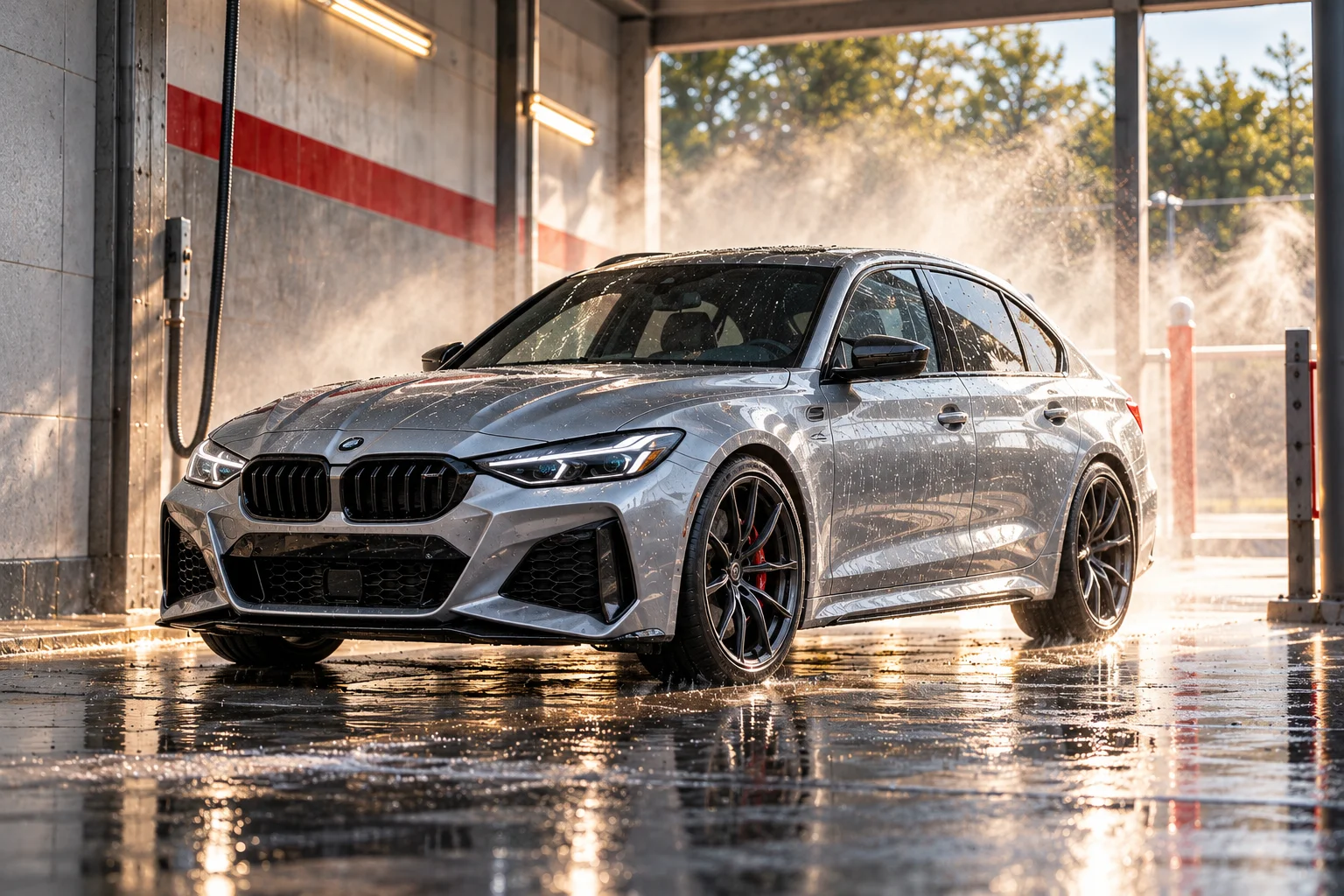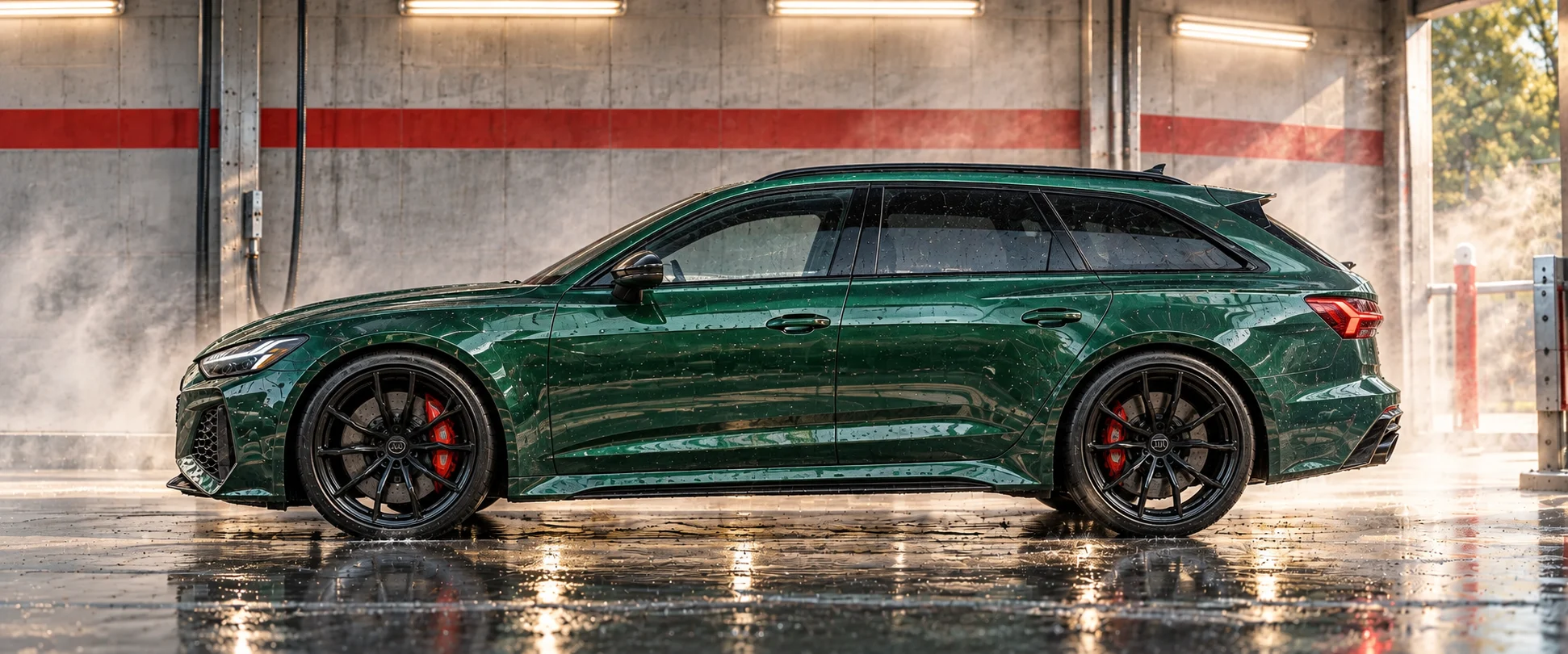
What is a touchless car wash?
In a touchless wash, detergent loosens the dirt and high-pressure water carries it away. No brushes or cloth touch the car, so the result depends on chemistry and timing.
How a touchless bay works
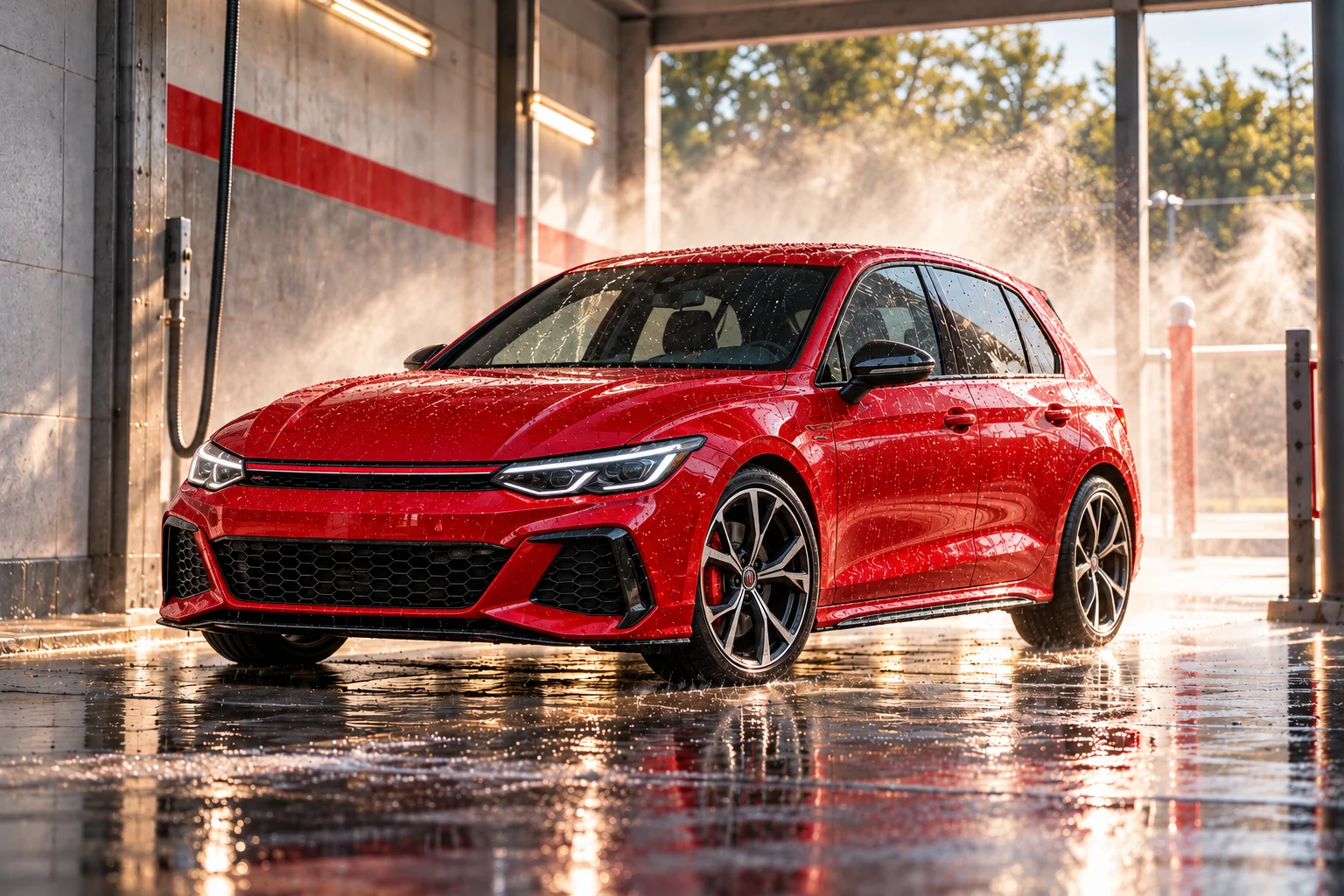
In an automatic in-bay wash, you drive into the bay, stop where the signal tells you, and stay in the car with the engine in park. The equipment moves around the vehicle instead of the vehicle moving through a tunnel. It sprays detergent, gives it time to work, then follows with high-pressure water and a dry. When the signal changes, you drive out.
That is how the bay at Fast Lane works: the entrance is on the side of the building under the red CARWASH ENTER sign, and a signal at the bay tells you when to pull in and when the wash is finished.
Chemistry does the scrubbing
With nothing rubbing the paint, the soap has to do the work a brush or mitt would do. A good detergent breaks the bond between road film and the clear coat so the water can lift it off. Many touchless systems use two different products for this, one aimed at greasy road film and one at mineral grime, applied one after the other.
Time matters here. Detergent that is rinsed off too quickly leaves film behind. Detergent that dries on the car in hot sun can leave marks. This is why automatic bays run a fixed sequence instead of letting you hurry through it.
What it does well
The main advantage is that nothing touches the paint. Brushes and cloths can pick up grit from the car before yours, and on dark paint that shows up as fine circular scratches in sunlight. A touchless wash avoids that risk entirely.
It is also well suited to frequent maintenance washing. Taking salt off every week in winter, rinsing off pollen in spring, or clearing dust after a gravel road are jobs a touchless wash handles easily, at any hour, without getting out in the cold.
Where it falls short
Some contamination is bonded too firmly for soap and water alone. Tar spots behind the wheels, hardened tree sap, bugs baked on over a week of summer driving and thick caked mud often need a dedicated remover or gentle hand work first. A car that has gone months without a wash may come out looking clean but still show a thin grey haze if you run a finger across the lower door.
A touchless wash also cleans the outside only. It will not polish out scratches, remove water spots that have etched into the glass, or clean door jambs and the inside of the fuel door.
Before you drive in
A few minutes of preparation gives a better result and avoids problems.
- Read the height and vehicle restrictions posted at the entrance, especially with a roof box, bike rack or lifted truck.
- Close every window and the sunroof all the way.
- Turn off automatic wipers so the sensor does not set them off mid-wash.
- Lower or remove a mast antenna if your car has one.
- Knock off chunks of packed snow and ice from the wheel arches and bumpers.
- Afterwards, wipe the door jambs and the bottom of the trunk opening, which a wash cannot reach.
In short: Use a touchless wash for regular upkeep and treat tar, sap and baked-on bugs by hand before or after it.