
Car care guides
Practical how-tos for each season: salt in winter, pollen in spring, bugs in summer, sap and leaves in fall.

From the first plow run in November until the street sweepers come out in spring, salt brine coats the lower half of every car in London. The paint you can see is rarely the problem. The damage starts underneath, on brake lines, the subframe and the inside lips of the wheel arches.

In May and June, tree pollen settles on paint and glass as a fine yellow or green dust, sometimes overnight. It looks harmless, but it is gritty and slightly sticky once dew or a light rain wets it.

A July evening on the 401 can leave the front of a car covered in bugs, and construction season adds tar and fresh asphalt specks behind the wheels. Both come off far more easily in the first few days than after a week in the sun.

In October, wet leaves stick to the hood and gather in every gap on the car. Left there for days, they hold moisture against the paint, can leave tannin stains on light colours, and clog the drains that keep water out of the cabin.
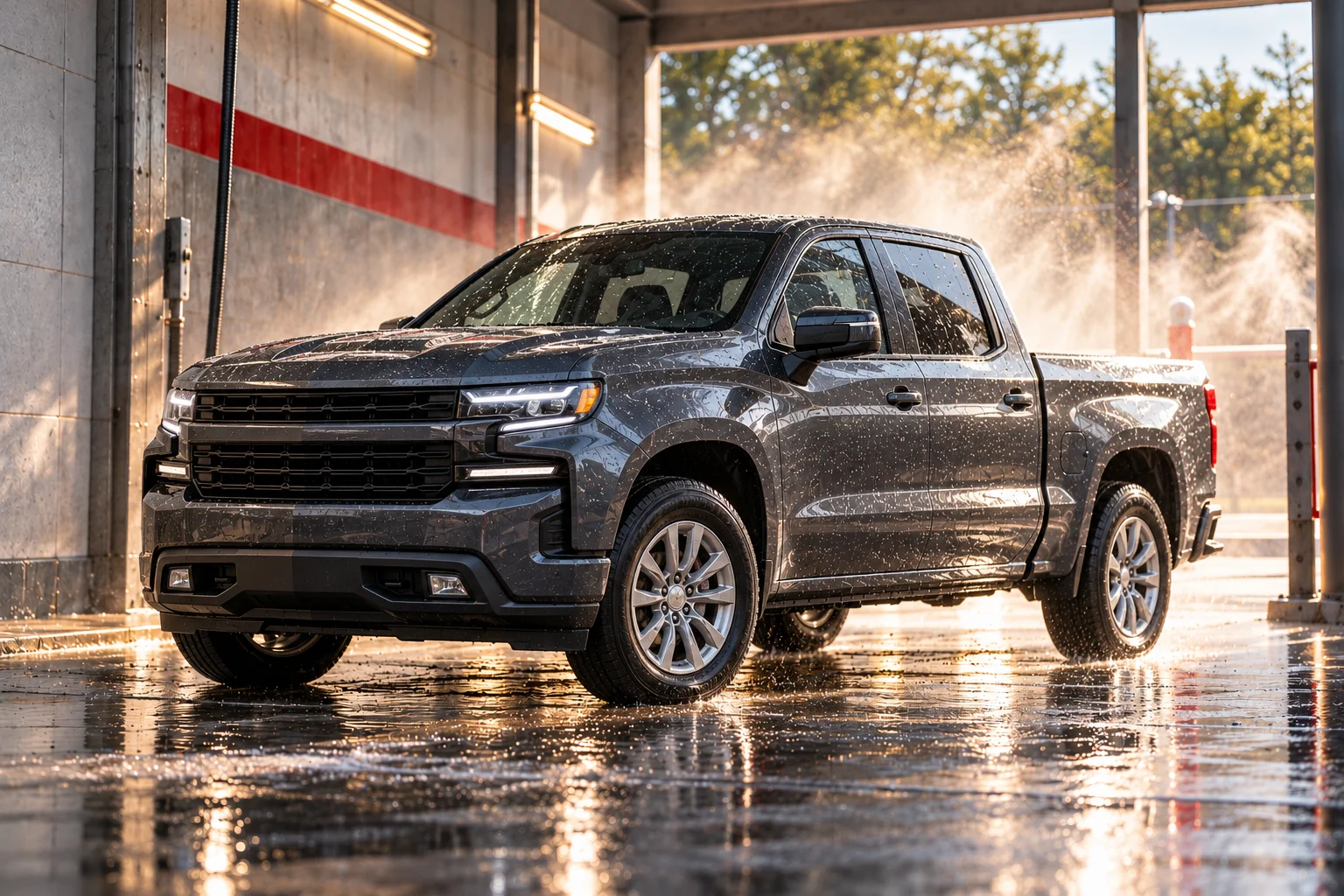
There is no single right number. How often you should wash depends mostly on the season, then on where the car is parked and how much of your driving is on the highway.

A touchless wash uses soap and high-pressure water without contacting the paint. A brush or soft-cloth wash adds friction. A careful hand wash gives the most control. The best choice depends on how dirty the car is, how much time you have and how much paint contact you want.
Buyers make up their minds from the listing photos, so the car needs to be clean on the day you take them. Work from the outside in and leave the photos until last.
After a long drive, most of the dirt is on the front end and the underside. Deal with those within a few days of getting home, before bugs harden and road grime dries on.