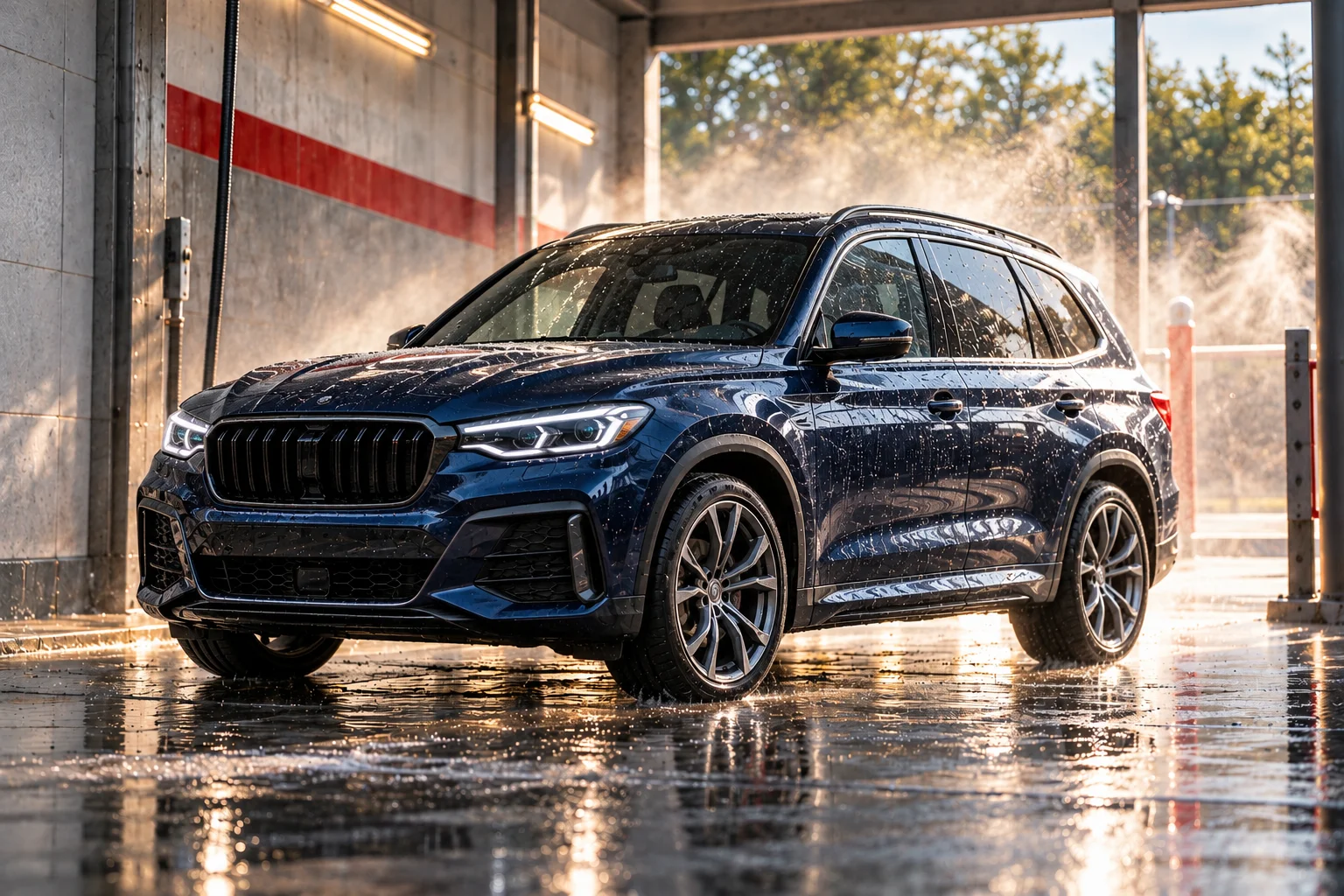
Drying your car after a wash
The dry stage clears the big flat panels. The water that causes spots and frozen doors is the water that runs out of mirrors, handles and seams a few minutes later.
Why water spots form
Water carries dissolved minerals. When a drop evaporates on the paint, the water leaves and the minerals stay as a pale ring. On dark paint and on glass they are easy to see, and in strong sun they dry faster and bake on harder. Most spots wipe away with a damp microfibre or come off in the next wash. Ones that have been left for weeks in heat can etch slightly and take more work.
The goal after any wash is simple: get the remaining water off before it evaporates on its own.
Where the water hides
An automatic dry pushes water off the roof, hood and doors well. It cannot reach inside the gaps. Pull forward somewhere clear of the exit, wait a minute or two, and you will see drips start from the same places on most cars.
- Under and behind the side mirrors
- Door handles, especially flush or pocketed ones
- The seam between the trunk lid or tailgate and the body
- Around the fuel door, and the charge port door on an EV
- Below the rear window and along the roof rails
- Licence plate frames and the light housings around them
How to towel off without scratching
Use a clean, plush microfibre towel. Bath towels and paper towels are rougher than they feel and can leave fine marks on clear coat. Blot or lay the towel flat and draw it gently towards you instead of scrubbing in circles.
Keep one towel for paint and glass, and a second, older one for the lower doors, rocker panels and wheels. The bottom of the car always has the most grit left on it, and you do not want that carried up onto the hood. Wash the towels without fabric softener, which clogs the fibres and makes them smear.
Drying in winter
Below freezing, the drips matter more than spots. Water that runs into a door seal can freeze the door shut within the time it takes to drive home. Before you leave, wipe the rubber seals on each door and the trunk, open and close every door once to break any film of ice forming, and blot around the fuel door.
Lift the wiper blades off the glass for a moment so they do not freeze to it, and clear the washer nozzles if they look wet. Then drive for ten minutes or so with the heat on before parking outside overnight. A thin coat of silicone spray on door seals, a common winter habit, also helps stop them sticking. Check your owner's manual for anything it recommends for your seals.
What not to do
Do not use a rubber squeegee or water blade on paint. If any grit is left on the surface, the blade drags it straight across. They are fine on glass. Do not wipe a car that still has visible dirt on the lower panels with your good towel. And do not stop right at the wash exit to dry, since the next car needs to come out.
In short: Keep two clean microfibre towels in the trunk, one for paint and glass and one for the lower panels, and blot mirrors, handles and seams a minute after you leave the bay.