Interior and exterior cleaning: what each one covers
The outside of the car deals with weather and roads, the inside deals with you. They wear in different ways, and an exterior wash does nothing for the cabin.

Two different kinds of dirt
Outside, the enemy is what the road and weather leave behind: salt, brine, brake dust, tar, bird droppings, sap and the oily film that builds up on highway driving. Left in place, those things corrode metal and dull paint. The outside needs washing on a schedule set by the season and the roads, roughly every week or two in a London winter and less often in a dry summer.
Inside, the dirt comes in on your boots and hands. Grit gets ground into carpet, salt dries into white crusts on the floor, skin oils build up on the steering wheel and door pulls, and a hazy film forms on the inside of the glass. None of that threatens the car's structure, but it wears out the cabin and makes it unpleasant to sit in.
What an exterior wash covers
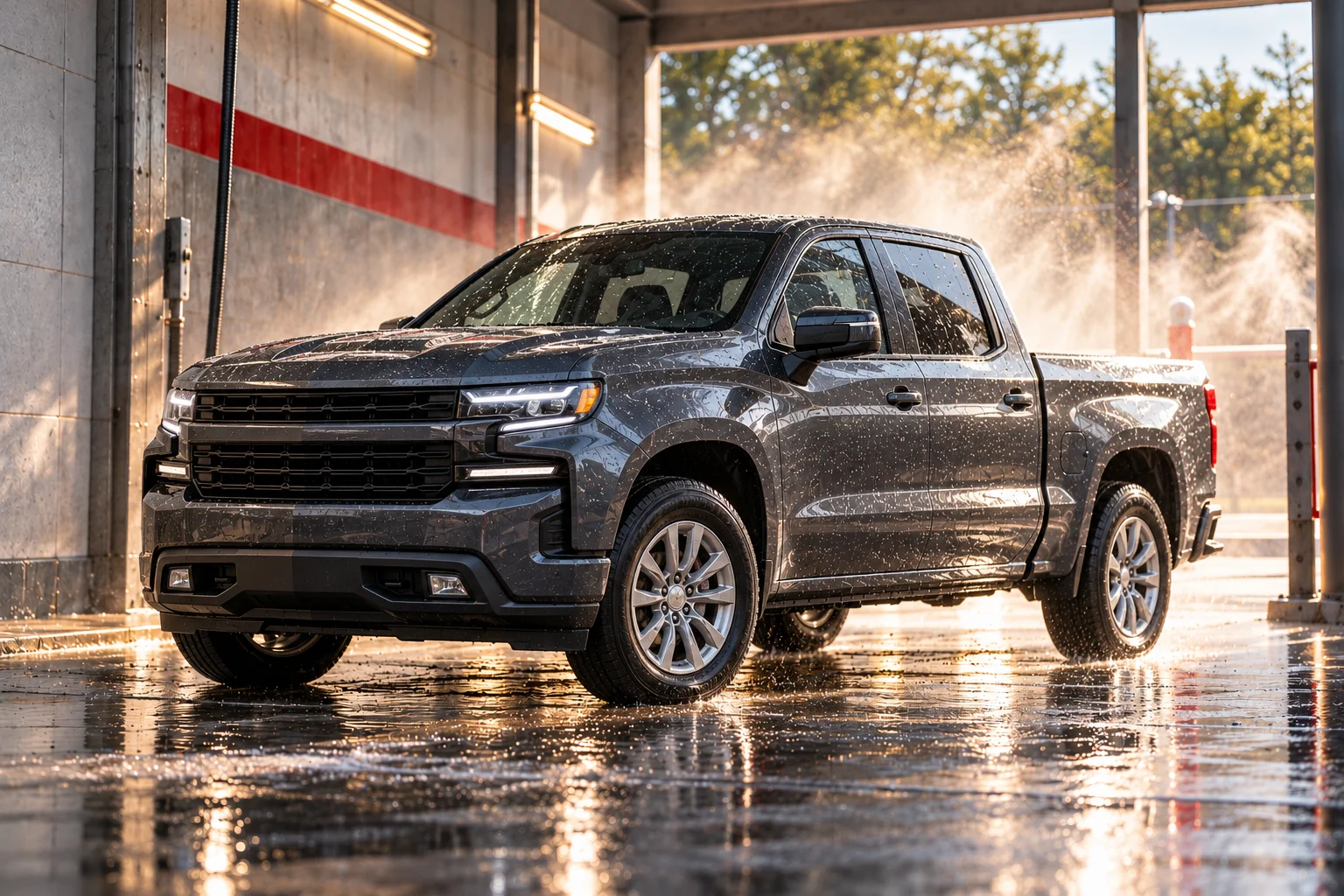
An automatic exterior wash cleans the paint, glass, wheels, trim and, if the package includes it, the underside. That last part is the bit you cannot easily do yourself at home, and it matters most in the salt season.
Fast Lane is an exterior-only touchless wash. It does not clean the inside of the car at all, so the cabin is a separate job however often you go through.
Salt in the carpets
Winter salt is the one interior problem that gets worse if you ignore it. The white tide marks on carpet and mats are salt that has dried out of slush. Vacuum first to lift the loose crystals. For the stains, many people use a mix of warm water and a little white vinegar on a cloth, blot rather than rub, then blot again with plain water. Test on a hidden patch first, since carpet materials vary.
The easier fix is prevention. Deep-ribbed rubber mats from November to April catch most of the slush. Take them out and rinse them every couple of weeks, and let them dry before putting them back so the carpet underneath does not stay damp.
The haze on the inside of the windshield
That greasy film that glares at night is a mix of breath, smoke if anyone smokes in the car, and residue from interior plastics, especially in a newer car on hot days. It does not wash off from outside. Clean the inside glass with a glass cleaner and two cloths: one to clean, one dry one to buff. Wipe across in one direction and then up and down, so you can tell which side a streak is on.
A sensible order
Do the exterior wash first, then the inside the same day if you can. Opening the doors on a clean car means you are not leaning against salty door sills or dragging road grime in from the jambs while you vacuum. The door jambs themselves are not reached by most automatic washes, so give them a wipe while the doors are open.
Also check the cabin air filter on the schedule in your owner's manual. If the fan smells musty or airflow has dropped, it is often overdue, particularly after a fall of parking under trees.
In short: Put rubber mats in before the first snow and rinse them every couple of weeks, because salt in the carpet is the one interior problem that compounds.