Washing a wagon

Wagons tend to be the family hauler, so they often arrive with a cargo box or bike rack still on the roof. The roof and the tailgate are the two things to sort out before washing.

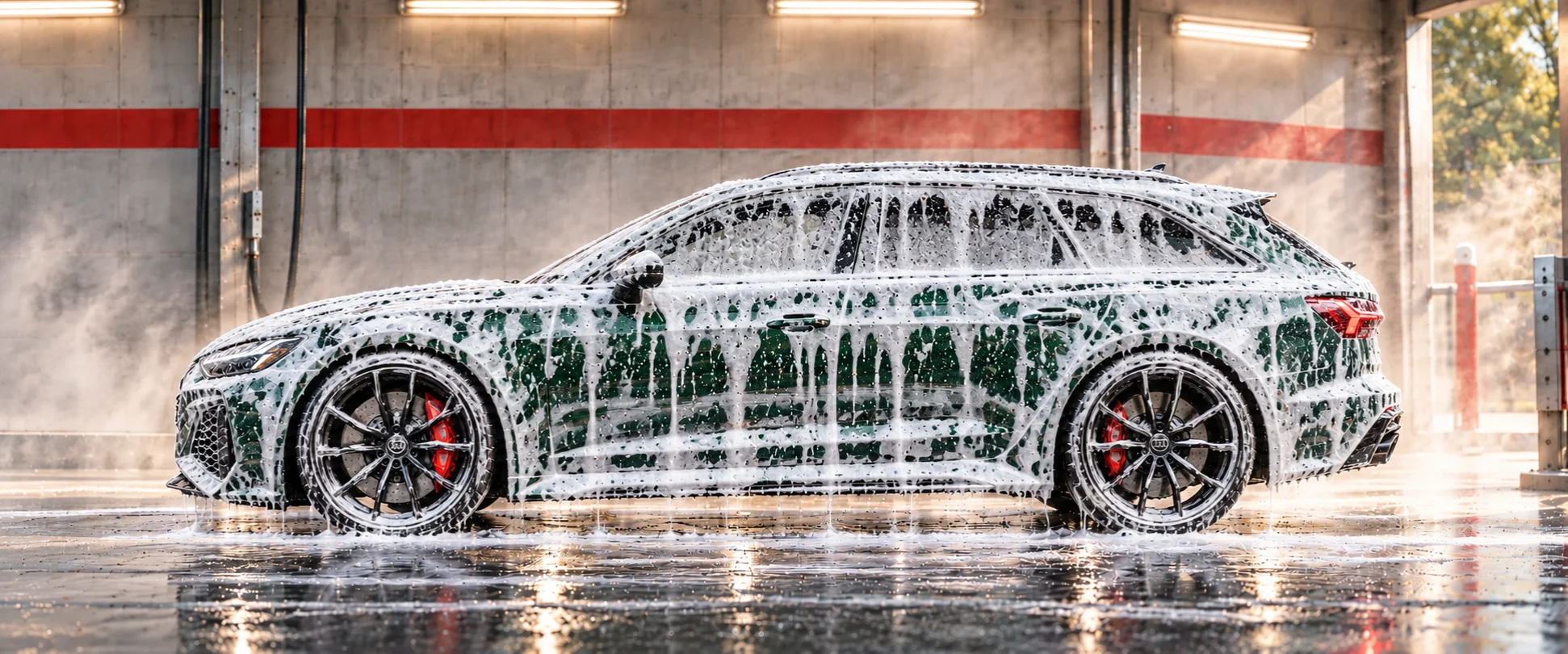
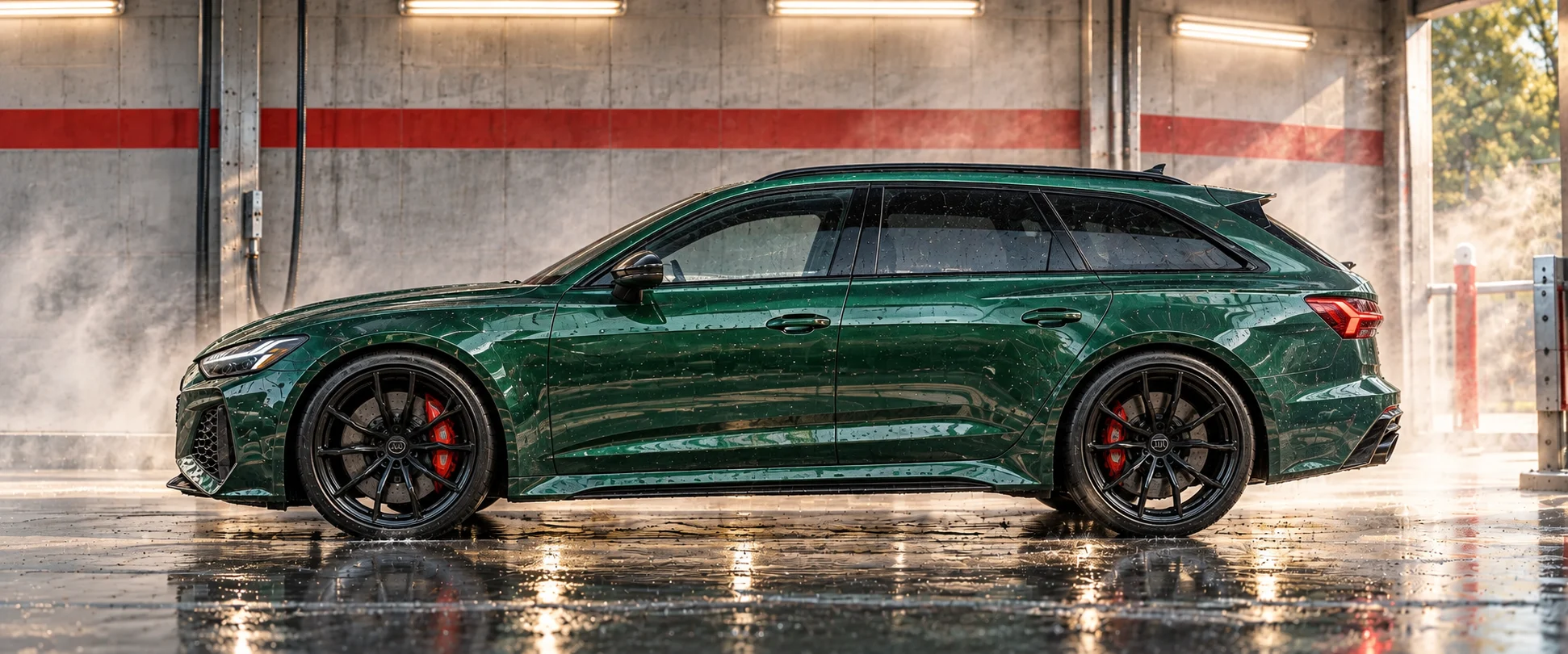
Wagon after a wash, illustrative scene

Check before you drive in

It takes a minute. The restrictions are posted at the entrance.

  • Cargo boxes and bike carriers

    Take them off before you come. A cargo box catches water, adds height and can be loosened by high-pressure spray. Bare roof rails or crossbars should still be checked against the posted restrictions.

  • Rear wiper

    Turn off the rear wiper and the front wipers, since many wagons run the rear wiper automatically in reverse. The blade should be parked flat against the glass.

  • Tailgate latched

    Close the tailgate firmly. Wagons have a long tailgate seal, and a partly closed gate can let water into the cargo floor.

  • Check the back after the wash

    The rear window and tailgate of a wagon collect a lot of road film from the air pulled behind the car. Look at it after the wash and wipe the rear glass inside if it is hazy.

Which wash for a wagon

Wagons do a lot of mixed driving, from school runs to cottage trips on gravel, so the underside gets as dirty as the body. Full Wash covers both. On a summer week when the car has only done town driving, Quick Wash is enough.

Full Wash

Quick plus an under-car spray. The one for salted roads.

$14.99$12.99 with fuel
  • Under-car spray
  • Not included: Rust inhibitor
  • Shampoo wash
  • Not included: Tri Foam conditioner
  • High-pressure rinse
  • Not included: Shine Guard Plus protectant
  • Dry
Full Wash details

$2 more than Quick Wash
Full