
Pickup truck beds and car washes
A pickup's bed, cover and frame need more thought than a car's paint. Empty the bed, check the cover, and make sure the wash reaches underneath.
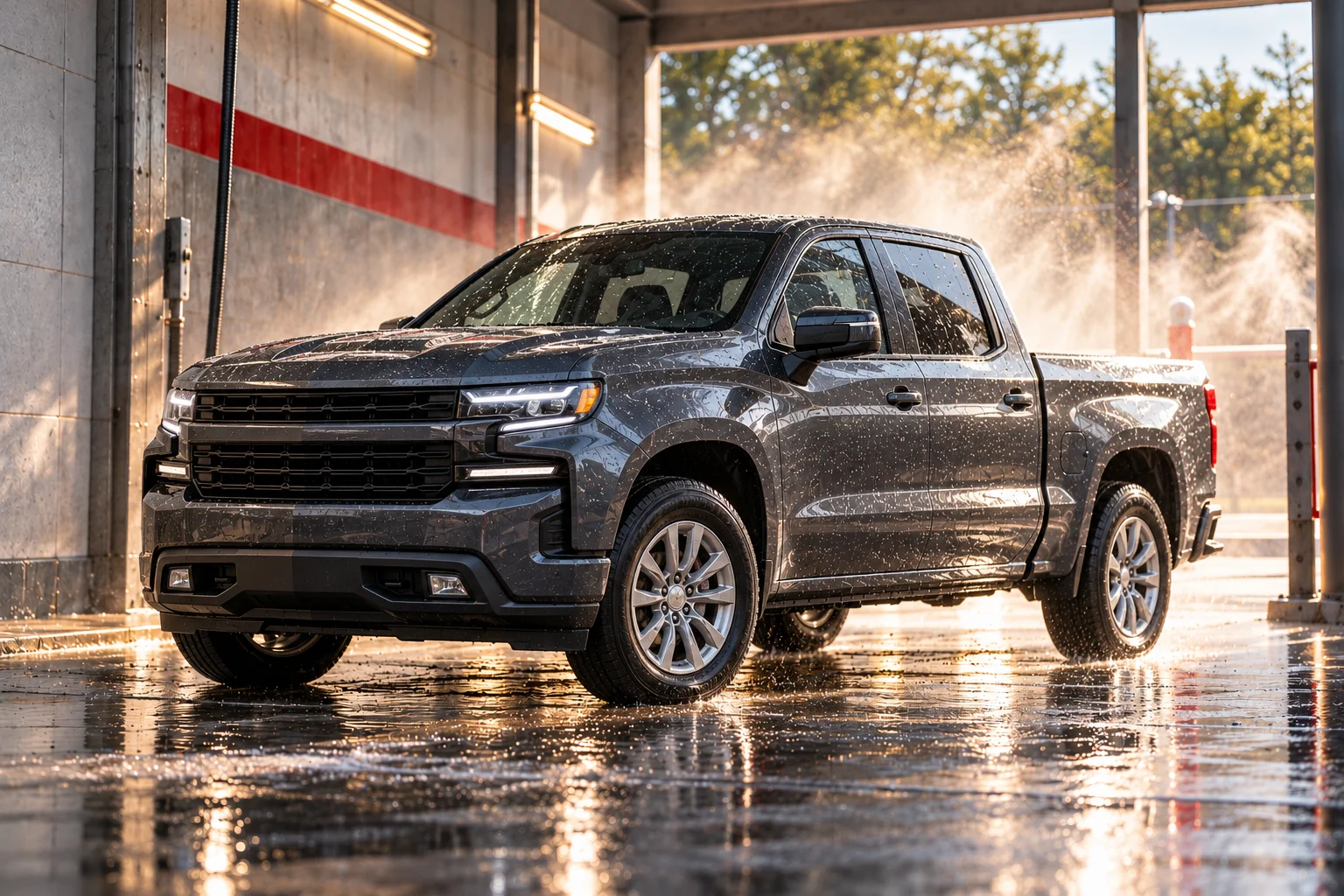
Empty the bed first
High-pressure water and air will move anything that isn't fastened down. Tie-down straps, bungee cords, a bag of salt, a tarp, wood offcuts and loose gravel can all shift, flap against the paint or end up on the bay floor. Take out anything you wouldn't want soaked, and coil up straps so they don't trail.
Check that toolbox lids are latched and locked. A box that looks closed but isn't fully latched can let a lot of water in, and the contents of a work truck's toolbox are usually not things you want wet.
Covers, caps and liners
Tonneau covers vary. Hard folding and hard rolling covers are generally built to handle weather, but check the cover maker's instructions about automatic washes, and make sure every latch is closed. Soft roll-up and snap covers are more likely to let water in at the edges and can flutter under strong spray. If yours is old or the snaps are loose, think about removing it or rolling it up.
A truck cap or topper should have every window and the rear door shut and latched. Older caps with dried-out seals will leak, so expect some water in the bed.
- Close and latch every section of a tonneau cover
- Shut all cap windows and the rear door
- Check that bed drain holes aren't blocked by dirt or leaves
- Lift a drop-in bed liner occasionally to rinse out what's trapped under it
About drop-in liners
A plastic drop-in liner protects the bed from scratches, but water, sand and salt get underneath it and stay there. Over a few winters that can rust the bed floor while the liner looks fine. If you have one, pull it out once or twice a year, rinse the bed and let it dry. Spray-in liners don't have this problem, but the bed edges and tailgate seams still collect salt.
Size and accessories
Pickups are bigger than the vehicles most wash bays are planned around, and accessories make them bigger again. Lifted trucks, roof-mounted light bars, ladder racks, tall antennas and extended towing mirrors all change how the truck fits. Fold tow mirrors in and take off anything mounted on the cab roof if you can.
Every automatic wash posts its size and vehicle restrictions at the entrance. Fast Lane's are posted at the bay entrance on the side of the building. Read them before you drive in, and if the truck is near any limit, don't try it.
The frame is where it counts
A pickup's frame is a ladder of open steel rails, with the spare tire, hitch receiver and brake lines tucked in among them. Salt collects on every flat surface and in every bracket. The back of the cab and the inside of the rear wheel arches catch slush too. Of everything on the truck, that's what benefits most from regular washing through the winter, so choose a wash with an under-car spray.
In short: Empty the bed, latch the cover and toolbox, fold the tow mirrors, read the posted limits, and wash with an underbody spray in winter.