Roof racks and automatic car washes
Anything on the roof adds height and gives water and air something to push against. Factory rails are usually fine; boxes and carriers should come off.
Not all racks are the same
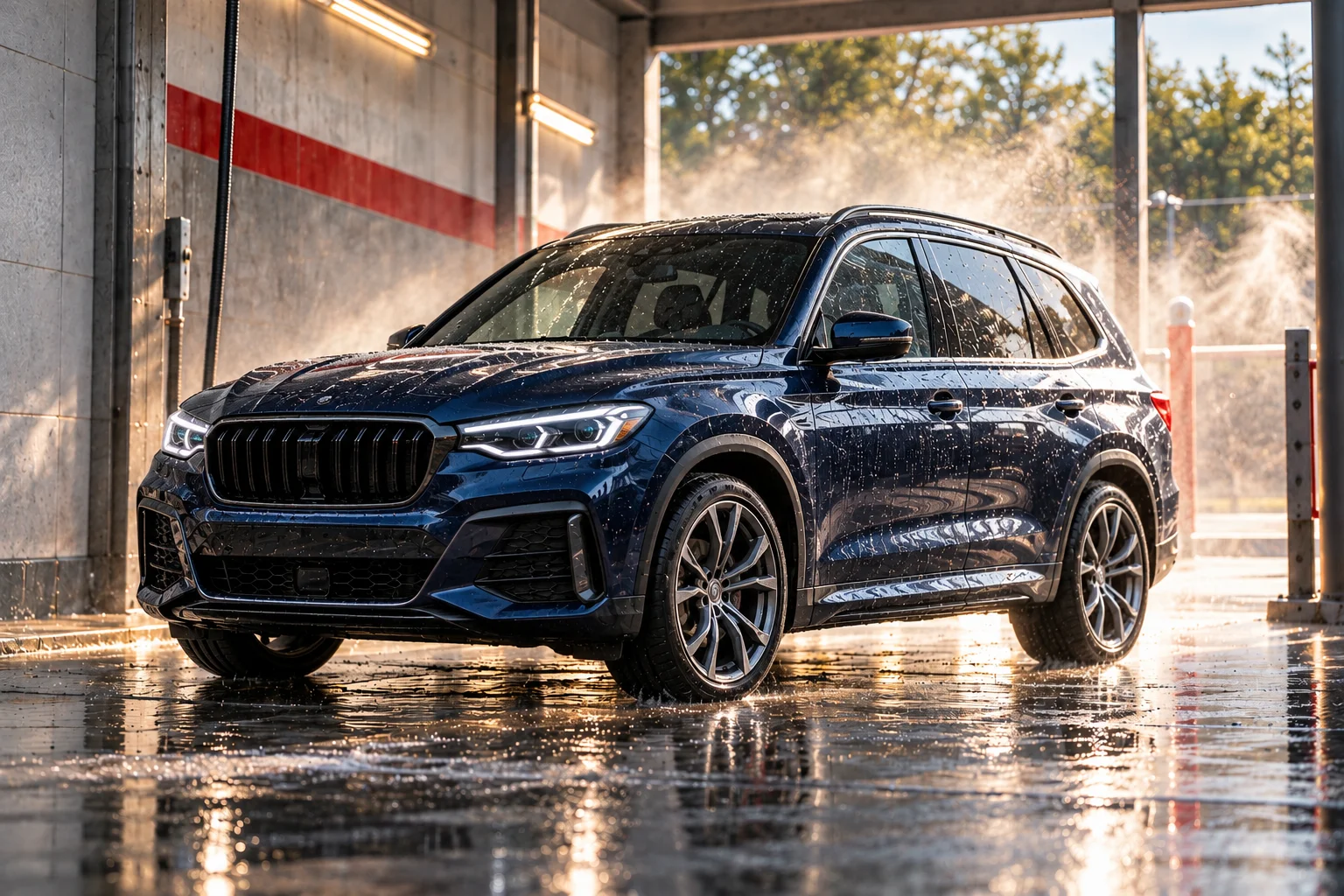
There's a big difference between the low rails a car came with from the factory and a full set of aftermarket bars with a cargo box on top. Most people think of them all as a roof rack, but they need different handling at a wash.
Factory side rails that run front to back are part of the car's design and usually sit close to the roof. Most owner's manuals don't ask you to do anything with them. Crossbars, whether factory or aftermarket, stick up further and run across the roof, where they meet the spray head on. Anything mounted on the bars, like a box or a carrier, adds a lot more.
What to take off
As a general rule, take off anything that's attached to the bars rather than to the car. Carriers are designed to hold their load while driving, not to take high-pressure water from every angle, and loose straps or locking arms can rattle or catch.
- Cargo boxes and roof bags
- Bike, ski and snowboard carriers
- Kayak cradles and loose foam blocks
- Rooftop tents and awnings
- Light bars and mast antennas, if they come off easily
Read the posted limits
Every automatic wash bay has height and vehicle restrictions posted at the entrance, and they are there because the equipment moves around the vehicle. A rack can push a tall SUV or van close to that limit. If you don't know how tall your vehicle is with the rack on, measure from the ground to the highest point before you go, and compare it with what's posted.
At Fast Lane, the restrictions are posted at the bay entrance under the red CARWASH ENTER sign. If anything on your vehicle is near a limit, or you aren't sure, skip the automatic wash.
Check the rack itself
The rack maker's instructions are worth a look. Some aftermarket systems say they can stay on through a touchless wash and some recommend removing the bars. Before you go, grab each bar near the feet and give it a firm shake. Nothing should move. Loose clamps, missing end caps and cracked rubber pads are easier to spot and fix in the driveway than after a wash.
After you take it off
When bars or a carrier come off, look at the paint where the feet and clamps sat. Grit gets trapped under rubber pads and can wear the paint underneath if the rack is left on for years. Wash the roof, then clean and dry the pads and the contact points before you put the rack back. In winter, salt spray collects around the feet and the rail mounts, so rinse there too.
If you only use the bars a few times a year, leaving them off the rest of the time is easier on the roof and quieter on the highway.
In short: Remove boxes and carriers before an automatic wash, measure your vehicle's height with the rack on, and compare it with the posted limits.