Washing an electric vehicle
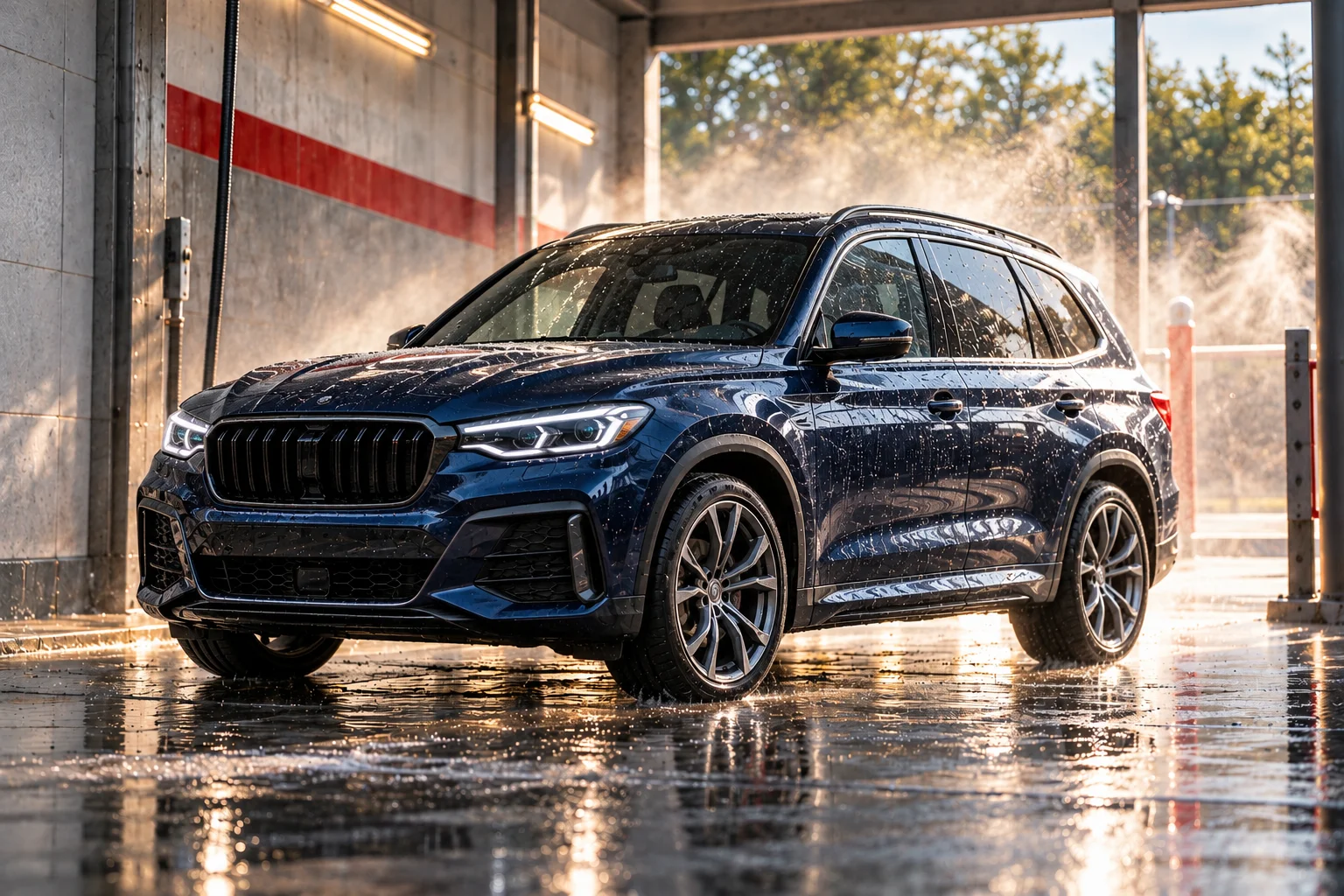
Washing an EV is mostly like washing any car. The differences are how it behaves in the bay, the charge port, and brakes that rust more easily in winter.
It's built for water
The battery pack and high-voltage parts on an electric vehicle are sealed against water, because they have to cope with heavy rain, puddles and slush thrown up from the road every day. Most manufacturers allow automatic washes. Some recommend touchless washes or warn against particular kinds of equipment, so it's worth reading the car wash section of your owner's manual once before you go.
How it behaves in the bay
This is where an EV is different from a gas car. There's no engine idling, so nothing tells you the car is still on. Many EVs shift into park on their own when you take off the seatbelt or open the door, and some lock themselves when the key moves away. Auto wipers can start when the spray hits the windshield. Parking sensors may beep the whole time.
Many EVs have a car wash mode that handles most of this at once. If yours doesn't, you can usually turn those features off one by one. Your owner's manual will say which apply to your car.
- Close the charge port door and make sure the car isn't plugged in
- Turn off automatic wipers
- Fold the mirrors if your manual recommends it
- Stop the car from auto-locking or walking away from you
- Follow the posted instructions at the bay for when to stop and when to leave
The charge port
The charge port is designed to get wet. Its door closes over a sealed inlet, and rain doesn't bother it. The only rules are simple: never wash the car while it's charging, and make sure the port door is fully closed before you drive in. In winter, a little water can freeze the port door shut, so open and close it once after the wash, the same way you would a fuel door.
Brakes and the underside
Regenerative braking does most of the slowing on an EV, so the friction brakes get used much less than on a gas car. That's good for brake wear, but it means the rotors don't get scrubbed clean as often. In a salty Ontario winter, they can build up rust and the calipers can start to stick. Some EVs have a setting that uses the friction brakes periodically to keep them clean. Washing the salt off the wheels and underside helps too.
Many EVs also have large flat panels underneath to smooth airflow and protect the battery. Those panels can trap salty slush in the gaps around their edges and fasteners. An underbody rinse through the winter is just as useful on an EV as on anything else, possibly more.
Weight and tires
EVs are heavy for their size, and they usually sit on tires designed for low rolling resistance. Neither affects washing much, but it's a good reason to keep the wheels and tires clean in winter, when you'll want to spot any sidewall damage or uneven wear early.
In short: Unplug, close the charge port and turn off auto wipers and auto-lock before you wash, and rinse the underside and wheels through the winter.