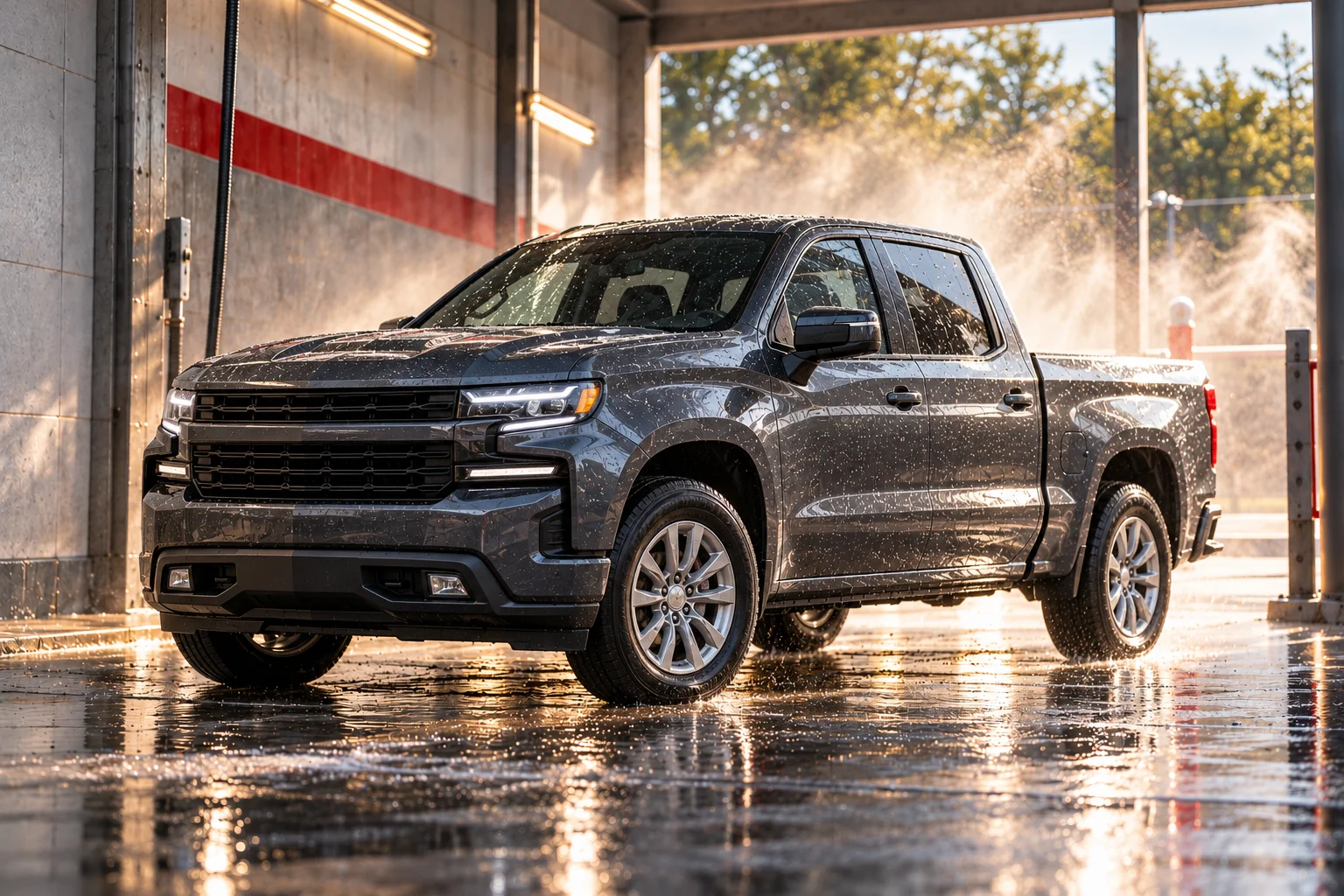
Car care during pollen season
Pollen is fine grit, so wiping it off a dry car drags it across the paint. Rinse it off instead, and check the cowl and door jambs where it collects.

When it starts and what it looks like
In London the first wave usually comes from maples, birches and oaks in late April and May. You see it as a pale green or grey dust on the hood and windshield in the morning. The heavy yellow coat most people picture is pine pollen, which tends to arrive from late May into June. Grass pollen follows through June and into July, and cottonwood fluff drifts into every gap in the car around the same time.
A dry, windy week will put a new layer on a parked car every day. A car that lives under a tree on a residential street gets far more than one parked in an open lot, so how often you deal with it depends a lot on where you park.
Why wiping it off is the mistake
Pollen grains are tiny but hard, and the dust that comes with them is harder still. Sweeping it off with a sleeve, a duster or a dry microfibre pushes all of that across the clear coat. Do it once and you probably won't notice. Do it every morning for six weeks and you get a haze of fine scratches that shows up in direct sun.
Rain doesn't solve it either. A light shower wets the pollen, and when it dries it leaves yellow tide lines along the bottom of every panel and a film on the glass that smears when the wipers run. Some pollen also turns sticky when it gets damp and bakes on in the sun. That residue is easier to lift while it's fresh than after a week of hot days.
Where it builds up
The flat surfaces are obvious. The places that cause trouble are the ones you don't look at. Pollen and the seeds and fluff that come with it pile up in the cowl at the base of the windshield, which is also where most cars draw in fresh air for the cabin.
- The cowl and wiper well below the windshield
- Door jambs and the channel under the hood edge
- Sunroof drains, if your car has one
- The cabin air filter, usually behind the glovebox
- Window rubber and the trim around the rear hatch
How often to wash and what kind
During the worst two or three weeks, a wash about once a week keeps it from building up and drying into a crust. Outside of those weeks, every couple of weeks is plenty. Pollen sits on top of the paint, so a basic shampoo wash and a good high-pressure rinse is all it needs. You don't need protectants or an underbody spray for this, although a waxed car does shed pollen more easily than bare paint.
Go for a touchless wash or a careful hand wash with plenty of water. The point is to float the grit off before anything touches the paint. After the wash, open the doors and hood and wipe the jambs with a damp cloth, because the spray doesn't reach inside them.
If allergies are the bigger problem
A dirty cabin air filter is the usual reason a car makes allergies worse in spring. Most owner's manuals list a replacement interval, and many filters can be swapped in a few minutes from behind the glovebox. Spring is a good time to do it. Running the fan on recirculate during high pollen days and clearing debris out of the cowl also help keep the inside of the car cleaner.
In short: Don't wipe pollen off dry: rinse it off weekly during peak weeks and replace the cabin air filter in spring.