A spring car care checklist for Ontario drivers
The order matters in spring. Get the salt off first, then look the car over properly, because you cannot see chips, rust or pothole damage under a winter crust.

Start with the salt
By March a London car has spent months driving through brine. Salt has worked its way into the seams of the doors and trunk, the pinch welds under the rocker panels, the subframe, the brake lines and the inside of the wheel arches. It does not stop working when the snow stops. Spring rain and warmer temperatures actually speed corrosion up, because salt reacts faster when it is damp and mild.
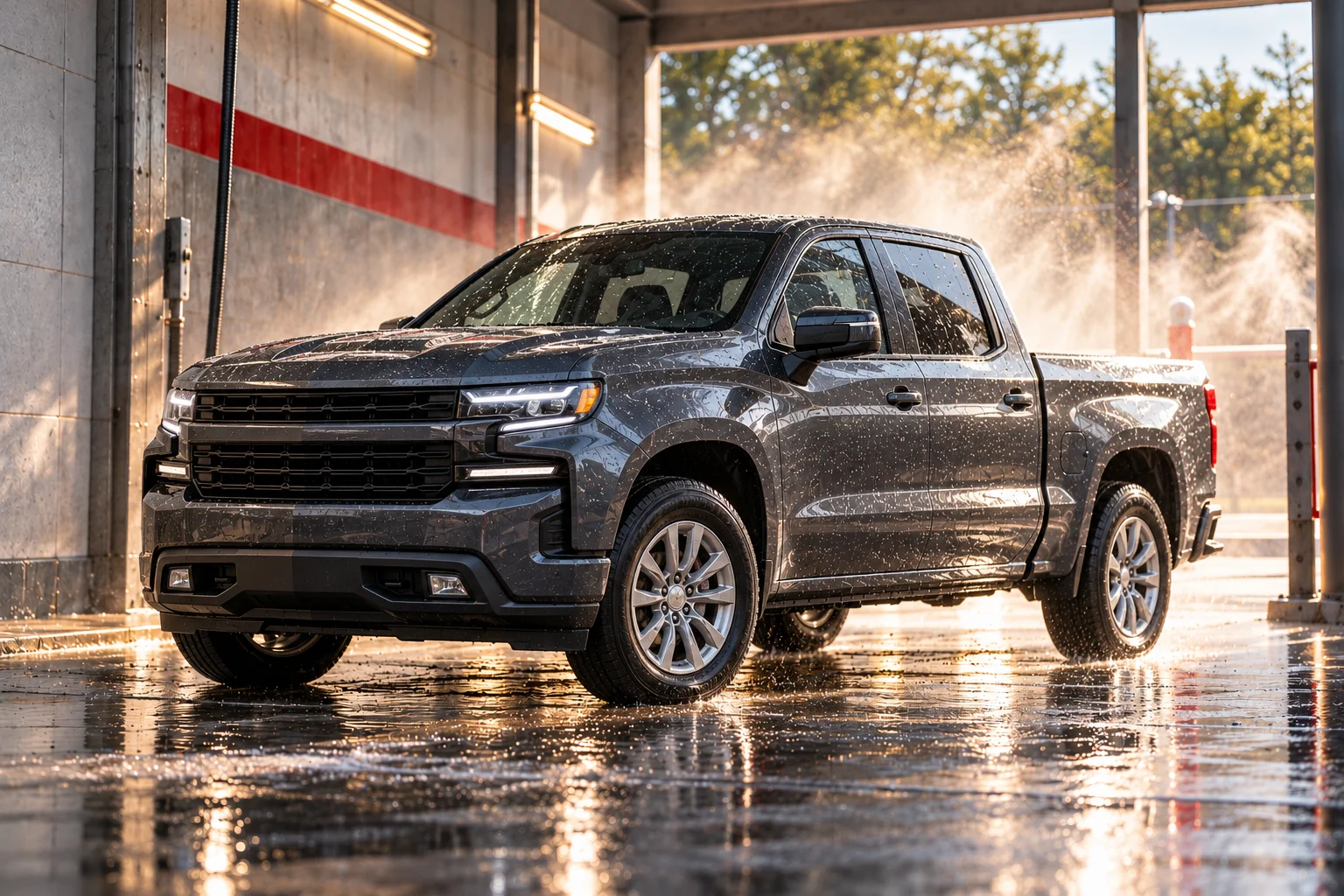
So the first job is a thorough wash with an under-car spray, ideally more than one over a few weeks as the last of the salt washes off the roads. If you only pick one thing to do in spring, do this. A wash with a rust inhibitor step, like the one in Fast Lane's Luxury Wash, adds a layer on the underside after the salt is rinsed off.
Then look the car over
With the car clean, walk around it in daylight. Winter leaves marks that are easy to miss under grime.
- Stone chips on the hood and front bumper: touch them up before the bare spots rust.
- Bubbling paint at the bottom of doors, wheel arches and the trunk lid edge.
- Scrape marks on the lower bumper from snowbanks and parking curbs.
- Cracked or chipped windshield, especially chips that have spread over the winter.
- Torn mud flaps and loose plastic splash guards under the front bumper.
- Fading or grey film on black plastic trim.
Tires and potholes
The common guideline in Ontario is to swap winter tires back to all-seasons or summer tires once daytime temperatures stay above about 7 degrees. Winter rubber wears quickly on warm, dry pavement. When the tires come off, have the shop look at tread depth and any bulges in the sidewalls.
Spring is also pothole season. If the car pulls to one side, the steering wheel sits off-centre when you drive straight, or you hit something hard over the winter, an alignment check is worth the cost. Bad alignment wears tires unevenly and quietly.
Wipers, fluid and lights
Winter is hard on wiper blades. Ice tears the rubber edge and scraping chips it. If the blades streak, replace them. You can keep using winter washer fluid until it runs out, then switch to a summer fluid with bug remover in it.
Check every light: headlights, brake lights, signals and the licence plate light. Winter grime and road salt also coat headlight lenses, so clean them while you are at it.
Inside the car
Salt stains on carpets and floor mats are white tide marks left by melted snow from boots. Take the mats out, rinse rubber ones with a hose, and treat carpet with warm water and a little vinegar or a carpet cleaner, then vacuum once dry. Leaving salt in the carpet keeps it damp, which can lead to a musty smell.
The cabin air filter is often due in spring too. It has spent the winter filtering road spray, and pollen season is about to start. Your owner's manual will say where it is and how often it needs changing.
Protect the paint for summer
Once the car is clean and any chips are touched up, put on a fresh coat of wax or sealant. Spring brings tree pollen, sap and bird droppings, and summer sun bakes them on. A protected surface lets them wash off in the next wash instead of staining the clear coat.
In short: Wash the underside before anything else in spring, then look the car over in daylight for chips and rust while it is still clean.