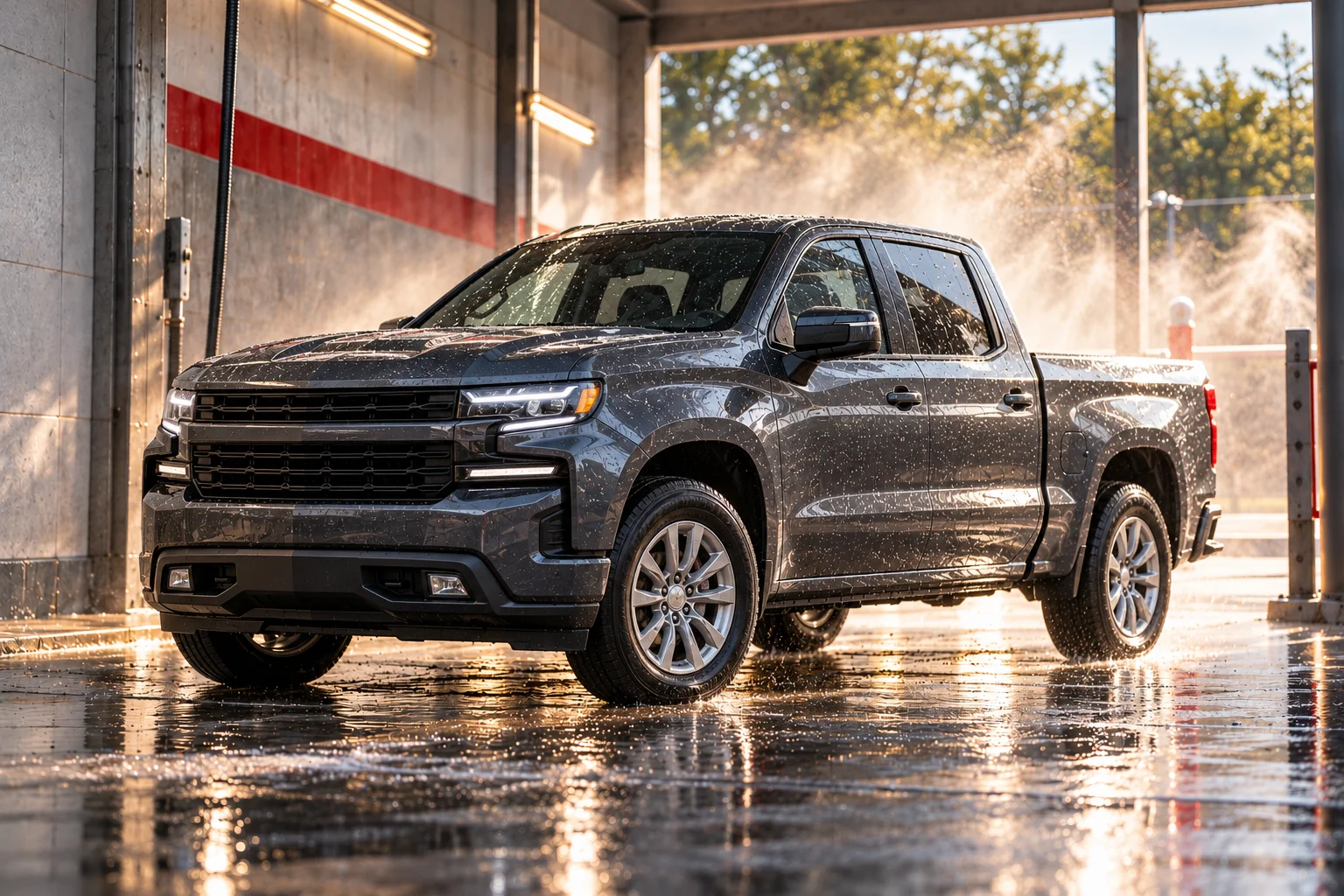
Why regular car washing matters
Most of the harm from road dirt comes from how long it sits on the car, so a steady routine does more than an occasional deep clean.
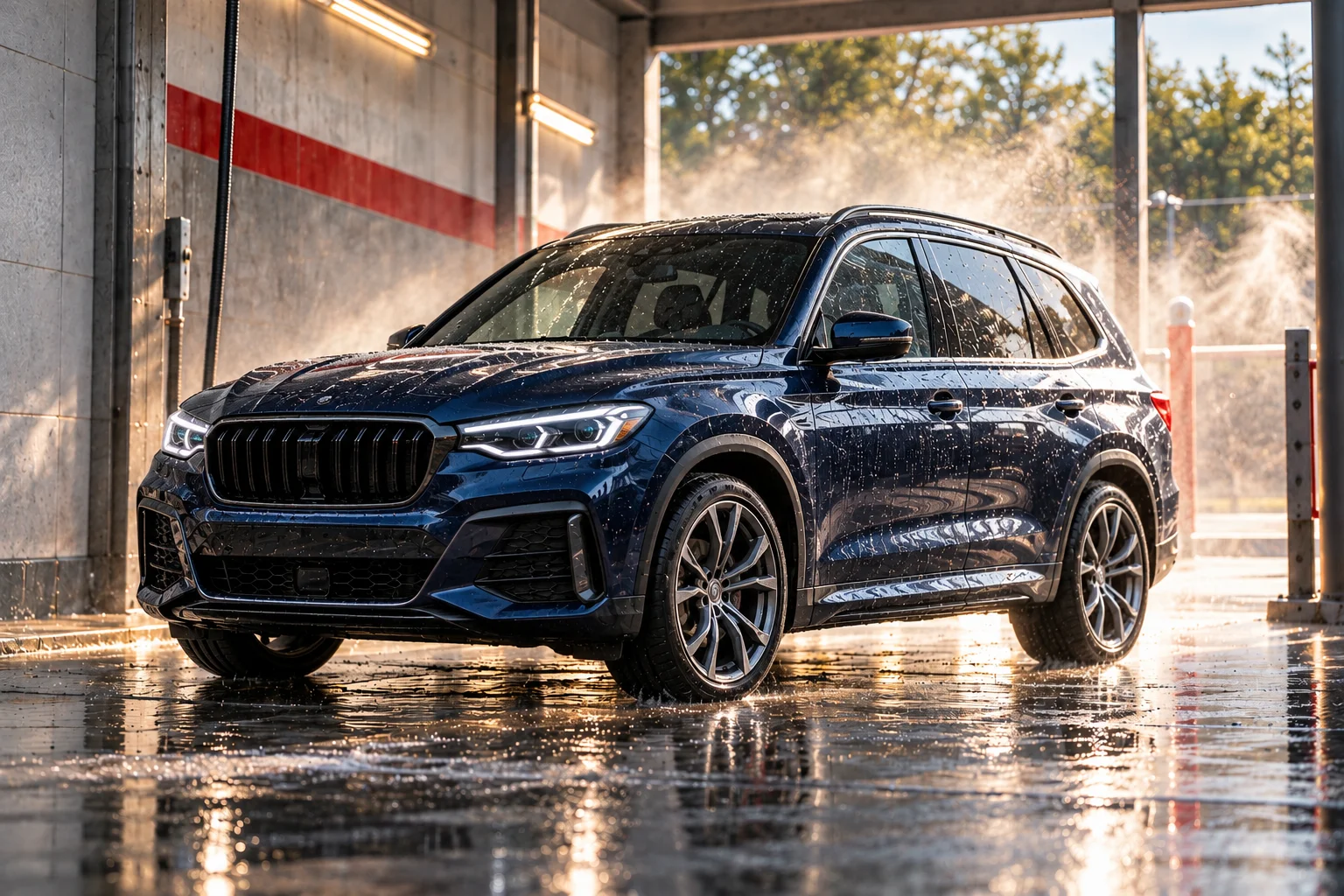
What builds up between washes
Road film is a layer of brake dust, tire rubber, oil mist thrown up by other traffic, exhaust soot and whatever the season adds: salt and brine in winter, pollen in May and June, bugs and tree sap in summer, wet leaves in the fall. Brake dust is mostly fine metal particles, which is why lighter cars sometimes show tiny orange specks on the rear doors and bumper after a few weeks.
Most of it lands on the lower third of the car and on the back. Hatchbacks, wagons and SUVs collect a grey film on the rear glass and tailgate because the air behind a flat back end swirls and drops dirt there. If your rear camera picture goes blurry within a week of a wash, that is why.
Time is the problem, not dirt
Paint has a clear coat on top that is thinner than a sheet of paper. A bit of dust on it does nothing. The trouble starts when something stays on it for weeks: salt brine that keeps the seams and lower door edges damp, bird droppings and bug remains that are acidic, sap that hardens in the sun. Heat speeds all of this up. A dropping that would wipe off in March can leave a dull imprint after one hot afternoon in July.
Built-up grit also makes every small contact worse. Leaning on the car, brushing snow off with a stiff broom, or wiping a dusty door with your sleeve drags that grit across the paint. A car that is washed often has less on it to scratch with.
The parts you look through
A dirty windshield is worse than it looks. Road film smears into a haze when the wipers run, and that haze lights up with oncoming headlights at night or with low sun on a winter afternoon. Headlight lenses coated in slush throw noticeably less light down the road. Many newer cars also have cameras and radar sensors in the windshield, grille and bumpers for lane keeping, adaptive cruise and parking. When those are coated, the car may switch the feature off or give false warnings. Your owner's manual will show where they are.
A schedule that fits the seasons here
There is no single right number, but a rough plan helps more than washing only when the car looks bad.
- Winter: every week or two while roads are salted, plus a wash after big storms once the roads are cleared.
- Early spring: one thorough wash with an underbody rinse once the salt trucks stop, to flush out what built up over the winter.
- Late spring: every two weeks or so. Pollen and the first sap show up on cars parked under trees.
- Summer: every two weeks, and deal with bird droppings and bugs within a day or two instead of waiting for the next wash.
- Fall: wash off leaves and sap, and add a protectant before the first salting so the paint goes into winter with a layer on it.
Making it a habit
The people who keep their cars in the best shape usually tie washing to something they already do: the weekly grocery run, filling up, the drive home on Friday. Fast Lane is open 24 hours, so a wash after a late shift or before an early start works as well as one on a Saturday afternoon. A short wash done every couple of weeks will keep a car in better condition than a long detail done twice a year.
In short: Put a wash on the calendar every two weeks, and move it to weekly while the roads are salted.